Hill Country renovations
Renovation should begin with the property already there.
A thoughtful renovation preserves what gives a home its identity, changes what limits daily life, and makes the old and new work read as one deliberate whole.
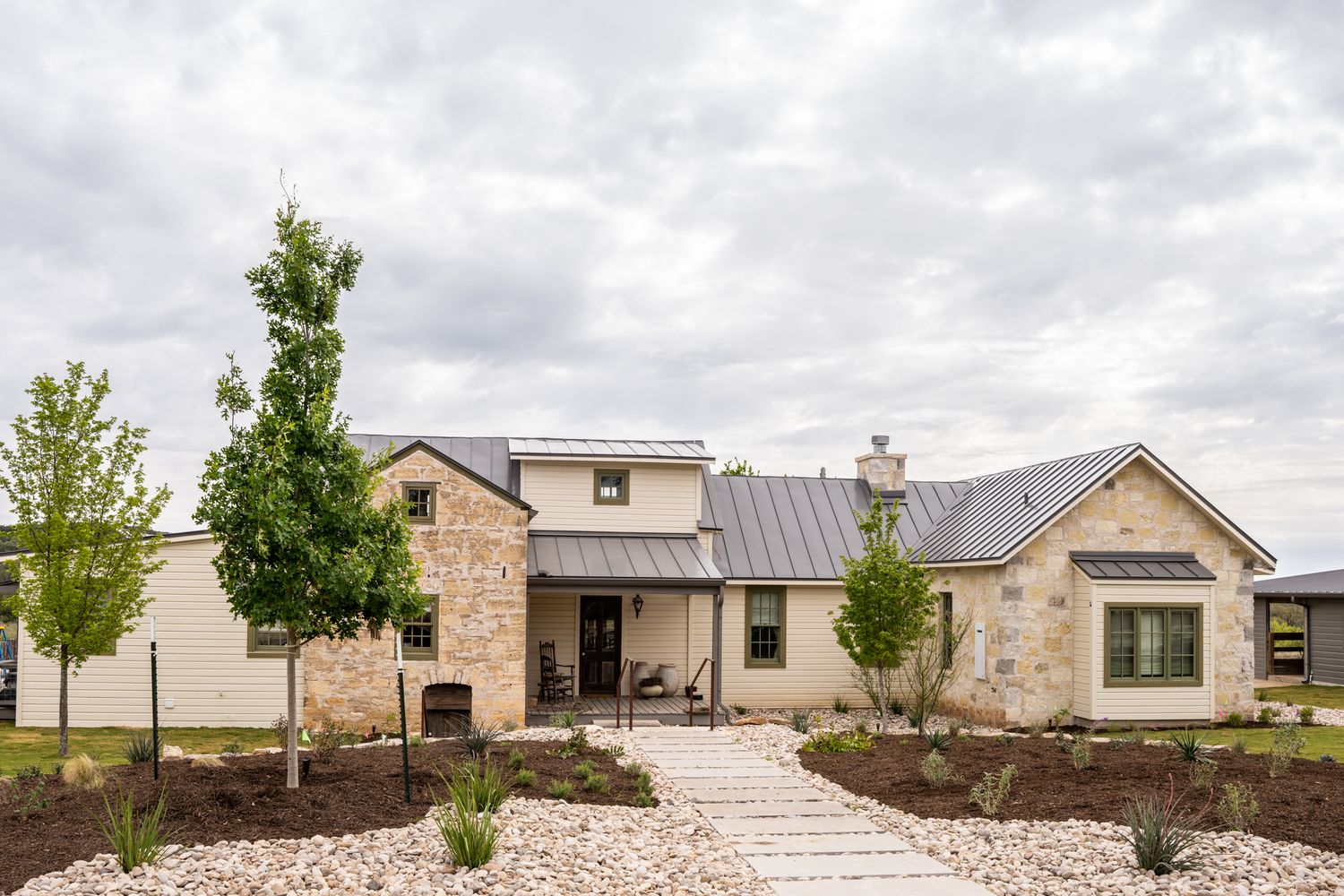
Identify the elements carrying the home’s character before removing anything.
Masonry, timber, millwork, proportions, roof forms, windows, room sequence, landscape relationships, and evidence of past use may all contribute to a property’s identity. Preservation does not require freezing a home in time.
It means making intentional choices about what remains visible, what is repaired, what is adapted, and what must change for the home to serve its next chapter.
Structure and systems often set the real boundaries of a renovation.
Previous work, incomplete drawings, aging utilities, foundation movement, water paths, insulation, and concealed framing can affect what appears to be a simple layout change.
Field investigation and specialist input help establish which assumptions are reasonable and where the scope should retain contingency for discovery.
New space should support the original home without becoming an imitation of it.
Massing, rooflines, floor levels, openings, material transitions, circulation, and outdoor relationships help an addition feel connected. A successful transition can be respectful and contemporary at the same time.
The appropriate approach depends on the home, the site, local requirements, and the reason for adding space.
Plain answers
Questions worth asking early.
Can Fusion renovate an older Hill Country home?
Older-home projects can be evaluated through intake and investigation. The home’s condition, project location, desired scope, required specialists, and preservation considerations determine fit.
How are concealed conditions handled?
The project documents should explain known conditions, investigation completed, allowances or contingencies, and the process for documenting newly discovered work. The specific agreement controls.
Can original materials be reused?
Potential reuse depends on condition, quantity, suitability, removal method, code or performance needs, and the new design. Identify important materials early so the plan can account for them.
A useful first conversation
The property and your priorities are enough to begin.
Tell us what the home should retain and what needs to change.
Fields marked * are required. An address, photos and notes are optional.
The form is loading. If it does not load, use the JobTread link below.
Your details are sent to Fusion Master Builders through JobTread so the team can respond to your inquiry.
Having trouble with this form? Open the same form in JobTread.
Historic preservation
Older homes deserve investigation before assumptions.
Yes, we do historic preservation work. With an older home, the existing structure is part of the scope, so we investigate before assuming.
A serious renovation begins with what is already there: what can stay, what must move, what the structure allows and which decisions will make the biggest difference to how the home lives.
- Existing structure and conditions reviewed first
- Character worth keeping identified early
- Systems, additions and daily function planned as one connected scope
- One accountable team from early planning through the final walkthrough